
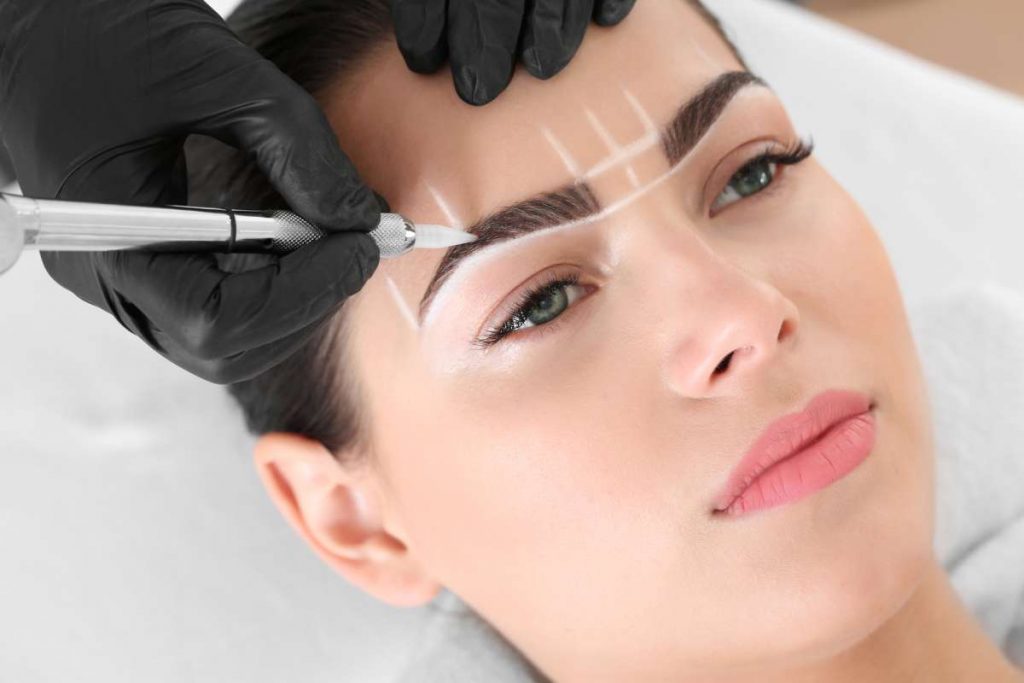
If you're tired of spending hours perfecting the shape of your eyebrows with pencil, then microblading may be the simple solution you've been looking for. The art of microblading is the key to convincingly fake, fuller eyebrows. Microblading is the most natural-looking method currently available for creating the illusion of fuller eyebrows.
It's challenging without an eyebrow kit. It can be a crucial part of any woman's life. After much consideration, though, we ultimately opted to get matching eyebrow tattoos because of how long it takes to apply all that powder. We decided it was time for a change, so we booked an appointment at Hibba, an eyebrow-focused salon in New York City. In any case, it's not impossible that greater consideration was given to this issue. It was inevitable that getting tattoos in the eyebrows that didn't look like tattoos would alter one's life permanently, and this was the case. Changes to the way life works are here to stay.
We commend your self-control if you haven't already been lured into an Insta-black hole of microblading before-and-after photos. If, like one of us, your eyebrows were ruined by Christina Aguilera-style tadpoles in the aughts (for a list of things you should never do to your eyebrows, go here), then you will become obsessed with microblading. Are you looking for a salon that provides microblading services? There's no need to go anywhere else, as Cosmetic Tattoo by Rach has everything you could possibly want.
Do you not understand what is being talked about right now? Our George Driver, Digital Beauty Editor, spoke with Suman Jalaf of SumanBrows Beauty Atelier to get the facts on microblading. Suman is widely regarded as an authority on microblading and is sometimes referred to as a "wonder worker" for eyebrows.
What Is Microblading?
Microblading is commonly referred to as "eyebrow architecture" because of its aesthetic results. It is crucial to create the ideal shape for each individual's face, with a bespoke strategy for each client. The equipment used is similar to a pen in shape, with a slanted blade and 15–18 needles at the end, allowing for pinpoint accuracy. In this method, the needles don't pierce the skin but instead merely scratch it like a paper cut. Fine, realistic, and natural hair strokes are implanted with medical-grade pigment in the epidermal layer of the skin using a needle.
Let's begin by defining microblading and discussing its application process. Microblading is a form of semi-permanent makeup that gives the appearance of fuller, more defined eyebrows. Contrary to micro-needling, this is a legitimate beauty treatment. To use a cosmetic tattoo pen, tiny holes are made in the skin, into which pigment is placed.
Is Microblading Worth The Hype?
The question remains as to whether the effects of semi-permanent cosmetics can truly displace brow pencils and gels, despite the fact that this trend appears to be all the rage at the moment. Three women who have gone through the tattoo removal process were interviewed for their candid thoughts on the topic.
The concept of microblading was regarded with scepticism when it was first introduced in 2018. The ability to have naturally beautiful eyebrows is a rarity, so the idea of permanently inking them into your face sounded, well, simply weird. We were curious about the procedure, so we spoke with three women who had gone through it. This research set out to find out for sure if microblading is effective at providing its claimed advantages. Get in touch with us to learn more about the microblading services we offer.
Having fuller lips and bushier brows are currently trending in the world of cosmetic enhancements. You can find many examples of women who have undergone cosmetic procedures to enhance their lips, eyes, or eyebrows by searching Instagram. The need for these therapies is rising. Stars like Angelina Jolie and Gwen Stefani are said to be fans, but many top stylists keep quiet about their A-list clientele. Some people go overboard in their pursuit of the ideal pout or brows, yet a little extra brow powder or liner may make your lips and brows stand out. You want to try a more natural approach, right? Pump Up the Stereo! How to Get Fuller Eyelashes, Lips, and Skin with the Best Cosmetics
Just what does this mean, exactly? "Long-wearing cosmetics" A dermatologist at Manhattan Dermatology & Cosmetic Surgery in New York City, defines permanent makeup as "Implanting dyes or pigments in the dermis to accentuate traits." Lips, brows, and eyelashes are the most typical areas of the face where permanent makeup is applied. Expert technicians like Dominique Bossavy are among the medical specialists that Engelman recommends to her patients for this procedure.
Think of it as a procedure akin to getting a very detailed tattoo with a local anaesthetic so it doesn't hurt. Stretch marks and surgical scars are only two examples of skin imperfections that can be covered up with permanent cosmetics. Vitiligo, alopecia and cleft lip, are just some of the skin issues that can be disguised with this method.
Because everyone wants to look their best as much as possible, it would seem obvious to take advantage of a method that makes one look stunning without the need for constant makeup application. In this case, though, the fact that the shortcut involves getting a tattoo makes the idea sound a little more radical than it otherwise would.
You should always "consider before you ink," regardless of whether or not you currently have tattoos on your body. If you get a tattoo and later regret it, the mistake could stay with you for the rest of your life. Therefore, it is understandable that many people are wary of getting cosmetic tattoos on their faces for fear of regretting their decision down the line. If you're considering getting your eyebrows tattooed, you should learn whether or not it's a good idea.
How Are Permanent Eyebrows Applied?
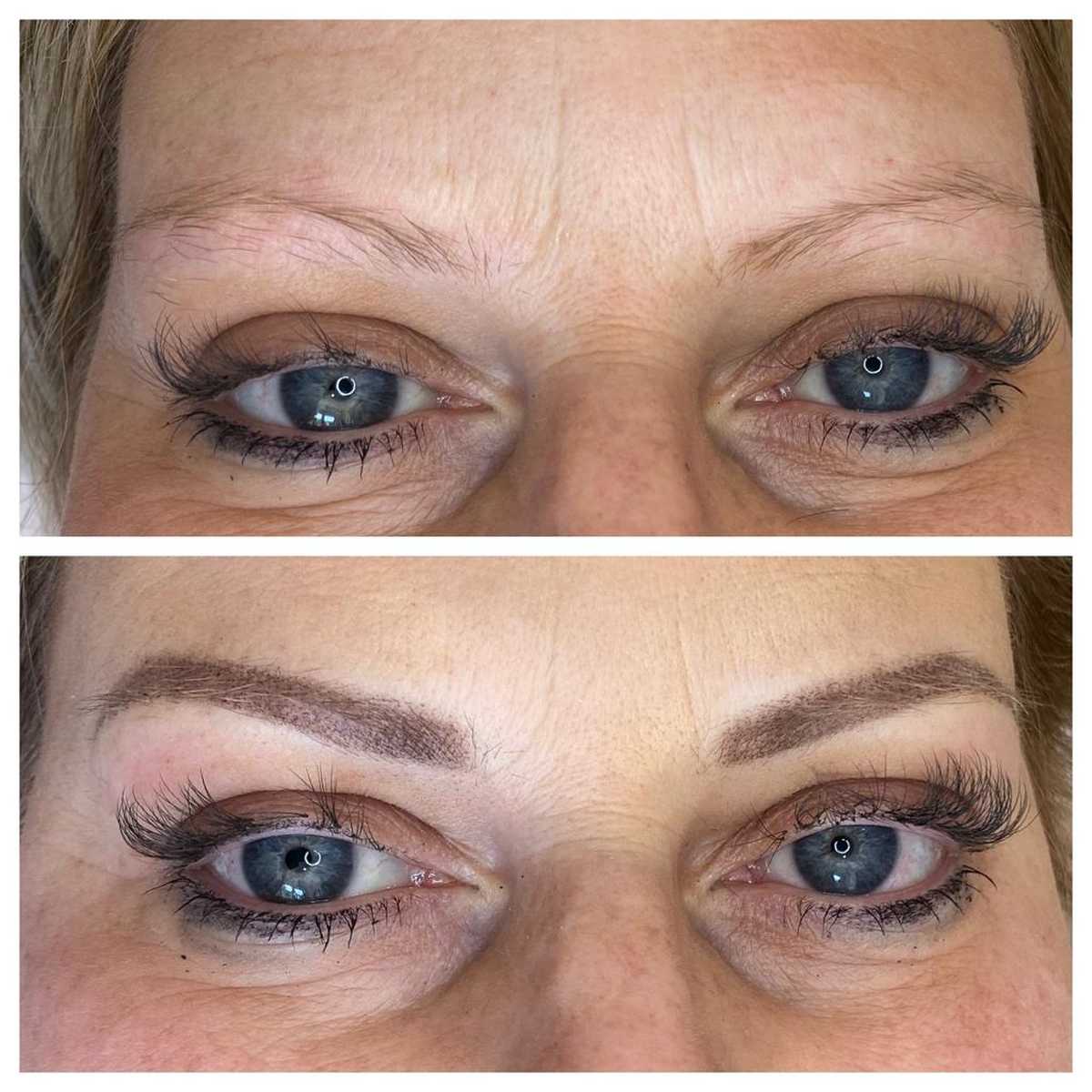
Getting a tattoo in the shape of your eyebrows is a great way to give your face instant contour and a stunning frame in a short period of time. You'll need to use micropigmentation, also called cosmetics tattooing or semi-permanent makeup, to finish the job. This technique entails injecting a tiny amount of coloured pigment beneath the skin, much like in conventional tattoos. Learn more about our microblading options by reading on.
A tattoo in the eyebrow doesn't have to look like a tattoo because of all the techniques that may be used to make it blend in. A skilled professional will use a process that is slow and arduous, placing each hair separately to create the appearance of natural eyebrows. The 3D semi-permanent eyebrows method could possibly be of interest to you. By colouring in the spaces between and around the individual hairs, this technique makes the eyebrows look more natural than any other.
The final form will depend on your preferences. If you want the shape of your natural eyebrows to be emphasised, you can achieve that by having a tattoo done that mimics the appearance of feathers. If you're the type of person who loves a little drama and constantly likes their eyebrows to look like they've been drawn on, you might want to speak to your practitioner regarding getting darker, more firm eyebrows. Due to the highly customizable nature of the tools and techniques, a competent permanent makeup artist can help you achieve virtually any desired look.
How Are They Different From Standard Tattoos?
Most people are nervous about getting eyebrow tattoos because of the word "tattoo" being part of the nomenclature of the process. Many people think of weathered fishermen with anchor tattoos on their sleeves when they consider getting a cosmetic tattoo. But the truth is that these tattoo subgenres couldn't be more distinct from one another.
This is why:
- Makeup tattoo pigments are meant to fade over time, so this one stands out. As a consequence, you won't have to worry about your older black tattoos turning a distasteful blue as they fade away.
- A tattoo on your body is made by inserting ink into the dermis, the skin's deepest layer. After that, the tattoo is placed deeper into the skin. The cells here are far more stable; therefore the tattoo will last a lifetime without fading. Cosmetic tattoos are placed in the epidermis, the outermost layer of skin.
- We use temporary ink, so the tattoos can be removed afterwards. Makeup that covers a tattoo in a deeper layer of skin will fade as the underlying layer of skin is renewed. Most eyebrow tattoos last for three to five years, though maintenance may be needed sooner or later. There is a strong risk that they won't exist after another five years.
- In some cases, getting a tattoo on your body can be quite painful. Getting your eyebrows tattooed probably hurts as much as getting your eyebrows removed. To put it in perspective, getting your eyebrows tattooed isn't quite as painful as this.
- Experts in the field get specialised education; for example, tattoo artists and cosmetic tattoo experts are certified in separate but related fields. We have a long list of skills to develop, including an understanding of colour theory, the anatomy of the face, the art of complimenting skin tones, and more.
There are numerous advantages and disadvantages of getting a tattoo on your body as opposed to relying on temporary cosmetics. Nonetheless, this should serve as a helpful reminder of the most fundamental differences. Microblading, feathering, and hair stroke tattooing are just some of the micropigmentation techniques we provide.
The Good
Considering the shorter downtime, this method is more commonly used on female patients. The editor of Cosmopolitan Australia, Amelia Bowe, decided to have long-lasting lipstick applied outside of her natural lip line in July of this year. She looked like she had naturally full lips, but they seemed slightly fuller without the addition of lip liner.
The desired effect is for the results to be under the radar. Try to picture permanent makeup as a more elegant form of tattooing. The American Academy of Micropigmentation is led by M.D., an anesthesiologist and permanent makeup expert. With permanent makeup, "the major difference is that we want no one to know what we did." We aim to provide women a better version of their natural look.
Aspen, Colorado native Anne Klein agrees with the move. Klein, who was less than proficient with applying eyeliner, spent a lot of time doing it while she was a model. The results she got were dismal. She claims that if left to her own devices, she would eventually look like a "circus clown." Her expression of awe was heartfelt. A morning shower is all that is required, however more elaborate preparations can be made if desired.
She goes on to say that folks with makeup allergies or those with mobility difficulties (such as those with Bell's palsy or a stroke's recovery) may also benefit from permanent makeup. Engelman argues that permanent cosmetics can help people who have severe reactions to conventional makeup or who have mobility impairments. Without surgery or recovery time, years of youthful vitality can be restored with a combination of fillers and Botox.
The Bad
However, permanent makeup does come with a few negatives. She was a local of Citrus County, Florida at the time she made the decision to undergo the procedure. She went to the spa where her brother-in-law worked as the manager. With the constant melting of her eyeliner from the extreme humidity, she decided to attempt permanent eyeliner. Cocuzza told me that the chemical we used to numb my eyes before applying eyeliner actually damaged my cornea and caused me three months of misery. Nothing like that ever happened again.
Dixon claims that in order to successfully numb the pain, a trained technician needs to know how to apply a local anaesthetic. This is of the utmost importance when working in areas where a mistake could have disastrous effects, such as the area around the mouth and eyes. The majority of complications following lip surgery are due to blistering. Complications typically arise from the lips.
According to Engelman, minor soreness at the incision site is the most common adverse effect of the procedure; nevertheless, serious complications are exceedingly rare when the procedure is overseen by a skilled technician or physician. Since more and more novice medical experts are beginning to offer the service, the greatest risk is that customers will be disappointed with the therapy as a whole.
She states that many of her clients come to her because they need help correcting mistakes committed by others or achieving a different result than they had planned for. It's necessary to consult a professional before getting permanent makeup done, and if you don't like the first one you talk to, keep looking until you do. In some cases, permanent makeup is fantastic.
Microblading Eyebrows: What Happens?
- Thorough washing, threading of brow hairs, and shaping are all part of a good skin care routine. This process requires a topical anaesthetic and 45 minutes to complete. In the event that the
- During the numbing process, we will offer the client a variety of colour samples, and we may discuss which one will best achieve the desired effect.
Day-By-Day Microblading Healing
Early to midweek. Your eyebrows will hurt a little bit and look dramatic, thick, and black when you frown. A dark scab has formed over the tattooed area due to the mixing of blood and ink. That's nice, right? It's at this time that you might notice that your eyebrows look heavier and darker than you'd prefer. You could be worried that you've gone too far, but you haven't. Eventually, after the mending process is complete, they will be much slenderer and lighter than they currently appear.
You'll be given some petroleum to rub on your skin anywhere from once to three times daily. It is vitally important that you never let water inside your eyebrows. From the 4th to the 14th day. After about 4 days, the scab will start to dry out and flake off, sometimes in large pieces. There will be a time commitment of many days. Those lighter spaces left behind by the pieces could make your brows look uneven.
You may notice a significant change in the colour of the skin directly behind your eyebrows when the crusts finally come off. The lack of colour may seem intentional. You'll be concerned that the tone wasn't foreboding enough. You should still apply petroleum but be very careful not to get your eyebrows wet in the process. In any case, by Day 10–Day 14, the scabs will have fallen off, and you should be able to clean your face normally again.
Days 14-21. The entire colour effect won't take place until your brows are significantly darker. You can now start to see how they will develop over time. Every six weeks, you'll have a checkup to see how things are doing and if there's anything else you want changed.
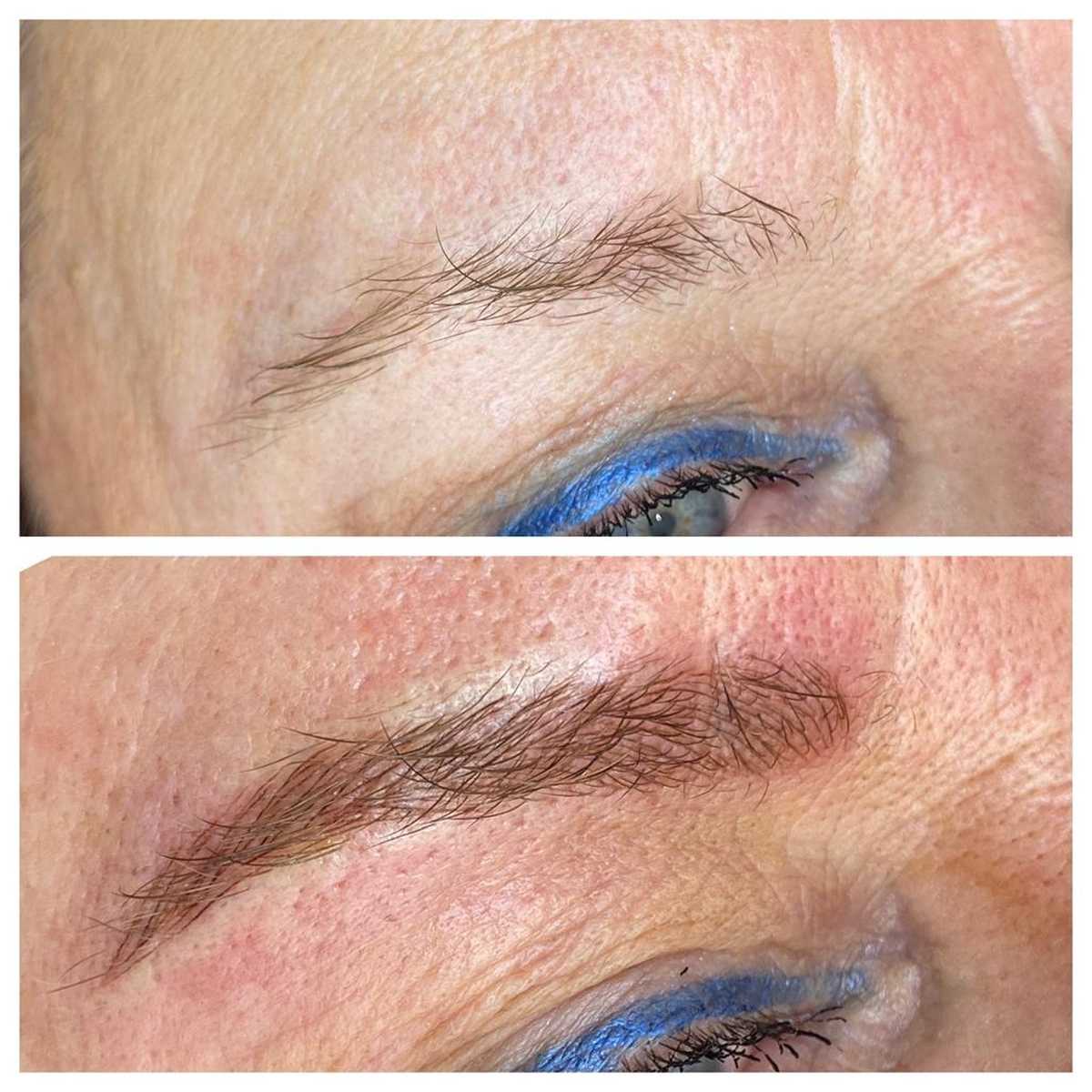
Although oily skin helps speed up the recovery time after a cut or scrape, it also makes it less likely that the tattoo's colour will persist. Uneven healing and quick fading of the hair strokes are possible side effects of getting microbladed eyebrows. But the remaining brow, which was now darker and fuller, held firm. Microblading is challenging for many people because of their greasy skin. Additionally, this was more common in women with powdered ombré hair. Hair strokes have their advantages, but they may cause skin problems in the long run.
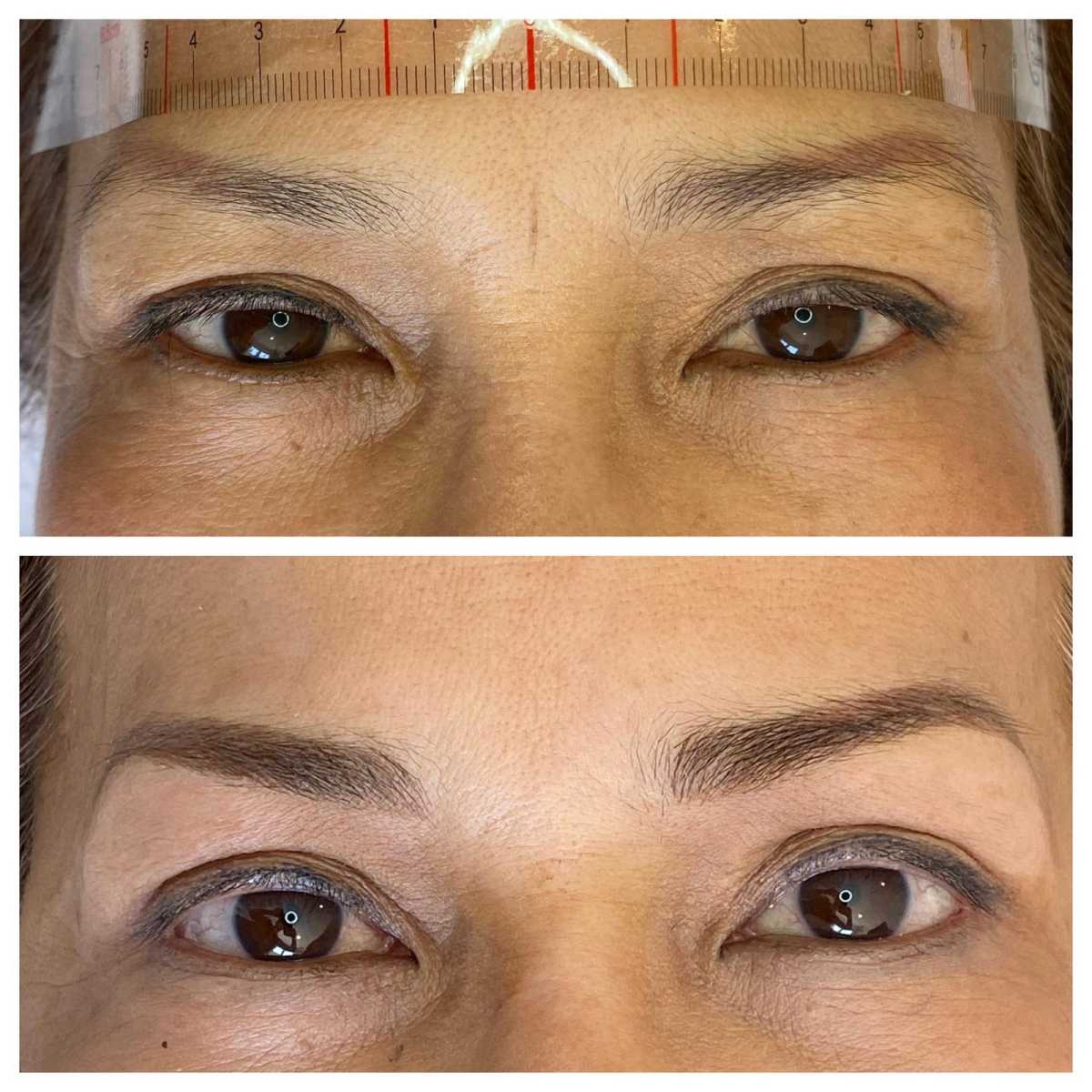
Outcome? Microblading Is Cost-Effective.
It's a source of pride to have neatly shaped brows. When your fillings and linings are done well, you look better. When worn in public, a complete face of makeup can make the eyebrows look less defined and finished if the foundation is not applied perfectly. Wearing brows makes a person look even more appealing when their face is severely sculpted and painted.
If You're Considering It...
Permanent makeup, words, "requires the hands of a surgeon and the eyes of an artist," so it's important to find out how many times the technician has performed the procedure and what exact shade and shape of ink will be used on your face. To see if a technician is certified by the American Academy of Micropigmentation, you can check their website. A permanent makeup artist must pass a written, oral, and practical exam to get certified. Because of this, we can assume that they are at least minimally competent in all procedures and safeguards. If you're looking for details about microblading, you can find everything you need on that page.
Ultimately, it is advised to trust one's gut while deciding whether or not to work for a corporation whose values are not a suitable fit. You need to get to a point where you trust yourself, and then you can start looking for someone who will listen to what will make you happy, the counsel says.
Though it may sound severe, eyebrow tattooing is one of the fastest growing therapies in the UK. If you're thinking about getting semi-permanent brows but aren't sure if you're ready to commit, don't hesitate to get in touch with us for advice. An increasing number of people are opting for semi-permanent brows.
Conclusion
Microblading is called "eyebrow architecture" because of its remarkable cosmetic results. The pen-shaped gadget includes 15–18 puncturing needles and a slanted blade. This technique scratches the skin instead of puncturing it. Microblading, a semi-permanent makeup technique, can enhance your eyebrows. Cosmetic tattoo pens pierce the skin and implant pigment.
Three tattoo-removed women were consulted. A tattoo on your eyebrows can define your face quickly. It would be best if you had cosmetic tattooing or micropigmentation. This procedure makes eyebrows look more realistic by colouring the white space between hairs. This one stick out because cosmetic tattoo pigments fade.
Botox and fillers can make you seem younger without surgery or rehab. Post-lip surgery concerns usually involve blistering. A skilled surgeon or technician seldom causes major complications during an operation. Consult a professional before getting permanent cosmetics, and if you prefer to avoid the first individual, keep looking. Scabs should fall off between days 10 and 14, allowing you to cleanse your face.
After your brows darken, you'll see the real effect. Six-week checkups will assess your progress. Then, browse enhanced sculpted and painted faces. Certified permanent makeup artists need knowledge and skill. Semi-permanent eyebrows are trending.
Content Summary
- If you're tired of spending hours perfecting the shape of your eyebrows with a pencil, then microblading may be the simple solution you've been looking for.
- The art of microblading is the key to convincingly fake, fuller eyebrows.
- Microblading is the most natural-looking method currently available for creating the illusion of fuller eyebrows.
- We decided it was time for a change, so we booked an appointment at Hibba, an eyebrow-focused salon in New York City.
- It was inevitable that getting tattoos on the eyebrows that didn't look like tattoos would alter one's life permanently, and this was the case.
- It is crucial to create the ideal shape for each individual's face, with a bespoke strategy for each client.
- Microblading is a form of semi-permanent makeup that gives the appearance of fuller, more defined eyebrows.
- To use a cosmetic tattoo pen, tiny holes are made in the skin, into which pigment is placed.
- The question remains whether the effects of semi-permanent cosmetics can truly displace brow pencils and gels, even though this trend appears to be all the rage.
- Three women who underwent the tattoo removal were interviewed for their opinions.
- The concept of microblading was regarded with scepticism when it was first introduced in 2018.
- We were curious about the procedure, so we spoke with three women who had gone through it.
- Having fuller lips and bushier brows are currently trending in the world of cosmetic enhancements.
- Stretch marks and surgical scars are only two examples of skin imperfections that can be covered with permanent cosmetics.
- Vitiligo, alopecia and cleft lip are some skin issues that can be disguised with this method.
- If you're considering getting your eyebrows tattooed, you should learn whether or not it's a good idea.
- Getting a tattoo in the shape of your eyebrows is a great way to give your face instant contour and a stunning frame quickly.
- If you want the shape of your natural eyebrows to be emphasised, you can achieve that by having a tattoo that mimics the appearance of feathers.
- Due to the highly customizable tools and techniques, a competent permanent makeup artist can help you achieve virtually any desired look.
- Most people are nervous about getting eyebrow tattoos because the word "tattoo" is part of the process's nomenclature.
- Most eyebrow tattoos last for three to five years, though maintenance may be needed sooner or later.
- Getting your eyebrows tattooed probably hurts as much as getting your eyebrows removed.
- Experts in the field get specialised education; for example, tattoo artists and cosmetic tattoo experts are certified in separate but related fields.
- Microblading, feathering, and hair stroke tattooing are just some of our micropigmentation techniques.
- Considering the shorter downtime, this method is more commonly used on female patients.
- The editor of Cosmopolitan Australia, Amelia Bowe, decided to have long-lasting lipstick applied outside her natural lip line in July of this year.
- Try to picture permanent makeup as a more elegant form of tattooing.
- The American Academy of Micropigmentation is led by M.D., an anesthesiologist and a permanent makeup expert.
- Aspen, Colorado native Anne Klein agrees with the move.
- Engelman argues that permanent cosmetics can help people with severe reactions to conventional makeup or mobility impairments.
- This is of the utmost importance when working in areas where a mistake could have disastrous effects, such as the area around the mouth and eyes.
- The majority of complications following lip surgery are due to blistering.
- According to Engelman, minor soreness at the incision site is the most common adverse effect of the procedure; nevertheless, serious complications are exceedingly rare when a skilled technician or physician oversees the procedure.
- It's necessary to consult a professional before getting permanent makeup done, and if you don't like the first one you talk to, keep looking until you do.
- In some cases, permanent makeup is fantastic.
- You may notice a significant change in the colour of the skin directly behind your eyebrows when the crusts finally come off.
- In any case, by Day 10–Day 14, the scabs will have fallen off, and you should be able to clean your face normally again.
- The full-colour effect will only occur once your brows are significantly darker.
- Although oily skin helps speed up recovery after a cut or scrape, it is less likely that the tattoo's colour will persist.
- Uneven healing and quick fading of hair strokes are possible side effects of getting microbladed eyebrows.
- Permanent makeup, in words, "requires the hands of a surgeon and the eyes of an artist," so it's important to find out how many times the technician has performed the procedure and what exact shade and shape of ink will be used on your face.
- To see if a technician is certified by the American Academy of Micropigmentation, you can check their website.
- To get certified, a permanent makeup artist must pass a written, oral, and practical exam.
- Though it may sound severe, eyebrow tattooing is one of the fastest-growing therapies in the UK.
- An increasing number of people are opting for semi-permanent brows.
Frequently Asked Questions About Microblading
Micro-feathering is a variant of the microblading method, which involves using needles or blades to colour the skin in a way that replicates the appearance of natural hair in order to draw greater attention to the eyebrows. The end result is brow hair that looks very natural.
So, is it really worth it to get microblading done? This question probably has a yes answer, and the response is that eyebrow microblading is unquestionably worth it. It is impossible to make a mistake when getting microblading done to your eyebrows, especially when one considers the level of skill and expertise that semi-permanent cosmetic artists have these days. The outcomes will come as a complete shock to you.
In the last section, we covered the fact that the effects of microblading might endure anywhere from 18 to 30 months. In general, it has to be touched up once or twice every year. You will need to return to your practitioner for a touch-up application as soon as the pigment that was applied during the process starts to noticeably fade away.
It isn't nearly as terrifying as it sounds, and if it's done perfectly, it will appear entirely natural to the naked eye. Aava claims that people are consistently surprised by how natural it appears. Even when you get really close, it's almost impossible to tell the difference between a genuine hair and one of the strokes.
Stop plucking or threading your eyebrows immediately if you want to keep the benefits of the cosmetic treatment you've had done. In order to get the full benefits of the procedure, you should wait at least two weeks after your visit before plucking or threading your eyebrows.